Behavioral_Strategy Pattern
✅ Strategy Pattern
- make a lot of algorithms
- encapsulate them
- and make them interchangeable at runtime, 갈아끼우기
- client will use the common interface only
- actual behavior can vary according to the selected strategy
- 👍🏻 algorithm is independent from the client that uses it
- 👍🏻 no need to use
if/else,switch
✅ Diagram
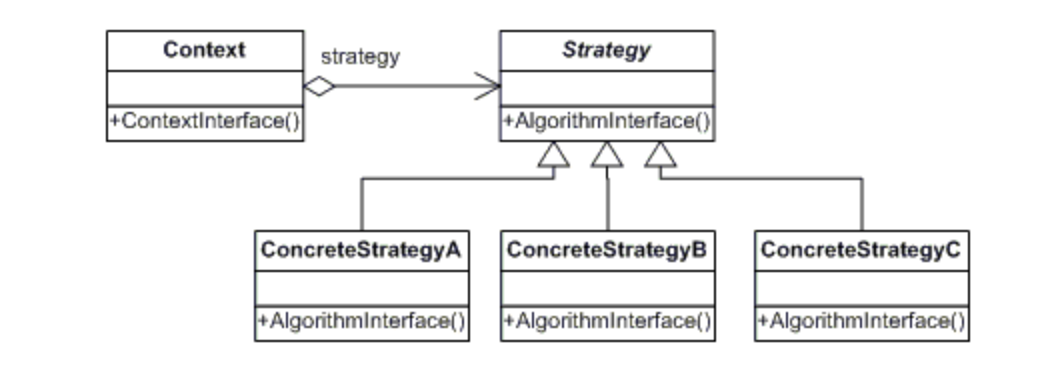
👀
👎🏻 before
1
2
3
if(paymentType.equals("PAYPAL")) { ... }
else if(paymentType.equals("CARD")) { ... }
else if(paymentType.equals("CRYPTO")) { ... }
✔️ Strategy interface
1
2
3
public interface PaymentStrategy {
    void pay(double amount);
}
✔️ Concrete strategies
- card payment method
- paypal payment method
1
2
3
4
5
6
7
8
9
10
11
12
13
14
15
public class CreditCardPayment implements PaymentStrategy {

    @Override
    public void pay(double amount) {
        //pay w credit card
    }
}

public class PaypalPayment implements PaymentStrategy {

    @Override
    public void pay(double amount) {
        //pay w paypal
    }
}
✔️ Context
- has
strategy interfaceas field
1
2
3
4
5
6
7
8
9
10
11
12
public class PaymentService {

    private PaymentStrategy paymentStrategy;

    public PaymentService(PaymentStrategy paymentStrategy) { //interchange, 갈아끼우기 method
        this.paymentStrategy = paymentStrategy;
    }

    public void processPayment(double amount) {
        paymentStrategy.pay(amount);
    }
}
✔️ Client
1
2
3
4
5
6
7
8
9
10
11
public class Main {

    public static void main(String[] args) {

        PaymentService service1 = new PaymentService( new CreditCardPayment()); //use card payment method
        service1.processPayment(100);

        PaymentService service2 = new PaymentService( new PaypalPayment()); //use paypal method
        service2.processPayment(100);
    }
}
🛠️
- used for Dependency injections
This post is licensed under CC BY 4.0 by the author.