Creational_Singleton
🛠️ When to use singleton
- when only one instance should exist
- 👀 settings of an application
✅ How to create singleton
- should not use
new❌ create method
getInstance()- ✔️ Setting instance class
1
2
3
4
5
6
7
8
9
10
11
12
public class Settings {
    private  Settings() {}
    //private constructor
    private static Settings instance;
    public static Settings getInstance(){
        if(instance == null){
            return new Settings();
        }else{
            return instance;
        }
    }
}
- ✔️ Main class
1
2
3
4
5
6
7
8
9
public class App {
    public static void main(String[] args) {
        //In singleton, cannot create instance with constructor ❌
        //Settings settings = new Settings();

        //how to create instance in singleton ➡️ use getInstance()
        Settings settings = Settings.getInstance();
    }
}
✅ How to create singleton in multithreading environment
- how to create singleton thread-safe
1️⃣ Use synchronized
- 👍🏻 threadsafe
- 👎🏻 lots of resources in using
synchronized - 👎🏻 aquiring, releasing lock is heavy work
1
2
3
4
5
6
7
8
9
10
11
12
13
14
public class Settings {
    private  Settings() {}
    //private constructor
    private static Settings instance;

    // use synchronized
    public static synchronized Settings getInstance(){
        if(instance == null){
            return new Settings();
        }else{
            return instance;
        }
    }
}
2️⃣ Eager initialization
create instance when the class is loaded, not when it’s first requested
- 👍🏻 threadsafe, instance is created once
- 👍🏻 create instance before, if creating the instance is not so heavy
- 👎🏻 instance is created even if never used
- 👎🏻 no lazy loading
1
2
3
4
5
6
7
8
9
10
11
12
public class Settings {
    //initiate setting instance
    //use static final
    private static final Settings INSTANCE = new Settings();

    //private constructor
    private  Settings() {}

    public static  Settings getInstance(){
            return INSTANCE;
    }
}
3️⃣ Double checked locking
- check if instance is
nulltwo times - 👍🏻 do not use
synchronizedevery timegetInstance()is called - 👍🏻 the instance is created when it is needed, lazy loading
- (no lazy loading was disadvantage of eager initialization)
- 👎🏻 keyword
volatile
1
2
3
4
5
6
7
8
9
10
11
12
13
14
15
16
public class Settings {

    private static volatile Settings instance;
    private  Settings() {}

    public static Settings getInstance(){
            if(instance == null ){ //check 1
                synchronized (Settings.class){
                    if(instance == null){ //check2
                        instance = new Settings();
                    }
                }
            }
            return instance;
    }
}
4️⃣ Double checked locking without volatile
1
2
3
4
5
6
7
8
9
10
11
12
public class Settings {

    private  Settings() {}

    //create an inner class
    private static class SettingsHolder{
        private static final Settings INSTANCE = new Settings();
    }
    public static  Settings getInstance(){
            return SettingsHolder.INSTANCE;
    }
}
💔 How can we break singleton?
- 아무리 내가 이쁘게 singleton을 구현해두더라도
- singleton 클래스 밖에서 reflection을 쓰거나 Serialization을 해버리면
내가 열심히 만든 singleton이 깨지게된다
- Serialization은 대응 방법이라도 있지, reflection은 대응 방법도 없음
1️⃣ By using reflection
- create the constructor from outside
Settings class - inside
main method() - no way to solve reflection problem
1
2
3
4
5
6
7
8
9
10
11
public class App {
    public static void main(String[] args) throws NoSuchMethodException, InvocationTargetException, InstantiationException, IllegalAccessException {
        Settings settings = Settings.getInstance();

        Constructor<Settings> constructor = Settings.class.getDeclaredConstructor();
        constructor.setAccessible(true);
        Settings settings1 = constructor.newInstance();

        System.out.println(settings ==  settings1);
    }
}
- This code accesses the private constructor via Reflection
- gets the private constructor of
Settings😱 - and breaks access control!!!!!
- and creates a second instance
2️⃣ Serialization
- serialization: save java into a file
- deserialization: start with byte stream and recreate the saved file into java
1
2
3
4
5
6
7
8
9
10
11
12
13
14
15
public class App {
    public static void main(String[] args) throws IOException, ClassNotFoundException {
        Settings settings = Settings.getInstance();
        Settings settings1 = null;

        try(ObjectOutput out = new ObjectOutputStream(new FileOutputStream("settings.obj"))){
            out.writeObject(settings);
        }

        try(ObjectInput in = new ObjectInputStream(new FileInputStream("settings.obj"))){
           settings1 = (Settings) in.readObject();
        }
    }
}
//now settings and settings1 will be different
💊 How to save singleton in serialization issue
- in deserialization, it uses the
readResolve()method - so,
OverridethereadResolve()method - and make it return
getInstance()
1
2
3
4
5
6
7
8
9
10
11
12
13
14
15
16
public class Settings implements Serializable {

    private  Settings() {}

    private static class SettingsHolder{
        private static final Settings INSTANCE = new Settings();
    }
    public static  Settings getInstance(){
            return SettingsHolder.INSTANCE;
    }

    //add readResolve()
    public Object readResolve(){
        return getInstance();
    }
}
✅ How to implement singleton in safe, simple manner
make singleton class
ENUMENUMsettings
1
2
3
public enum Setting {
    INSTANCE
}
- As
ENUMdoes not allow creating constructor from outside, reflection problem solved - Now in main class, serialization problem solved
1
2
3
4
5
6
7
8
9
10
11
12
13
14
15
16
public class App {
    public static void main(String[] args) throws IOException, ClassNotFoundException {

        Setting setting = Setting.INSTANCE;
        Setting setting1 = null;
        try(ObjectOutput out = new ObjectOutputStream(new FileOutputStream("settings.obj"))){
            out.writeObject(setting);
        }

        try(ObjectInput in = new ObjectInputStream(new FileInputStream("settings.obj"))){
            setting1 = (Setting) in.readObject();
        }

        System.out.println(setting == setting1); //true
    }
}
- 👎🏻 class has to be created before being used
- 👎🏻 no inheritence can be used in ENUM
🛠️ When is singleton used?
1️⃣ java.lang.Runtime
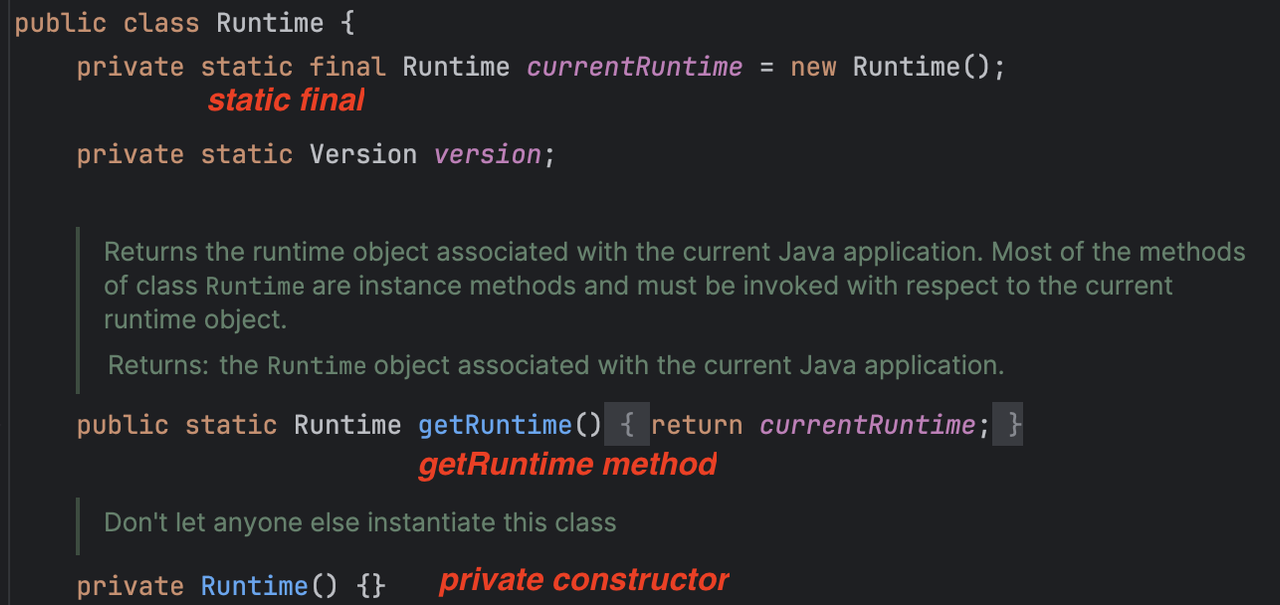
- can only create one instance of
Runtime - need to create instance with
getRuntime() - 🛠️ used to measure java resources in runtime
1
2
3
4
5
6
7
public class RuntimeExample {
    public static void main(String[] args) {
        Runtime runtime = Runtime.getRuntime();
        System.out.println(runtime.maxMemory());

    }
}
2️⃣ Singleton scope
- strictly speaking not singleton,
- but to create bean scope
1
2
3
4
5
6
7
8
9
10
public class SpringExample {
    public static void main(String[] args) {
        ApplicationContext applicationContext = new AnnotationConfigApplicationContext(SpringConfig.class);
        String hello = applicationContext.getBean("hello", String.class);
        String hello2 = applicationContext.getBean("hello", String.class);

        System.out.println(hello == hello2); //true
    }
}
This post is licensed under CC BY 4.0 by the author.