3.12 Conclusion_Perfect installation plan
✅ WHat is a Perfect plan?
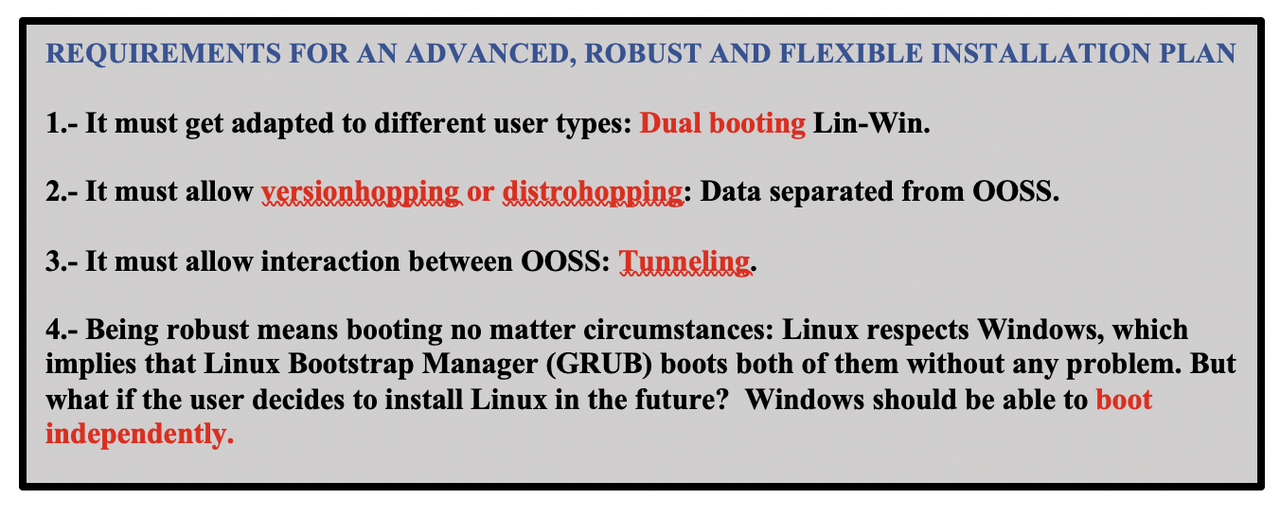
1️⃣ It must get adapted to different user types: Dual booting Lin-Win
2️⃣ It must allow version hopping or distrohopping
have data separated from the OS
👍🏻 You can change OS without losing information
3️⃣ It must allow interaction between OOSS: tunneling
common channel between both OS
4️⃣ No matter the circumstances, the system must work
Linux will boot windows
But just incase you uninstall Linux, make windows independent
💊 Create booting for windows too, do not rely on linux. Maybe oneday you want to uninstall Linux
- ➡️ If we follow this plan, disks will be adaptative
✅ Steps on installation
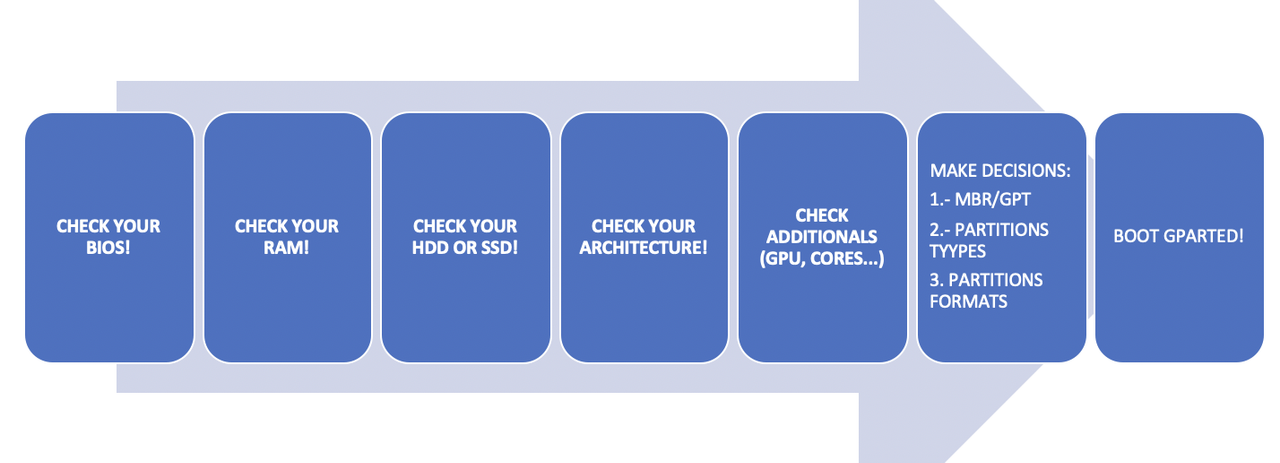
1️⃣ Check your specs, limits
- use commands
use CPU-Z
- check the following
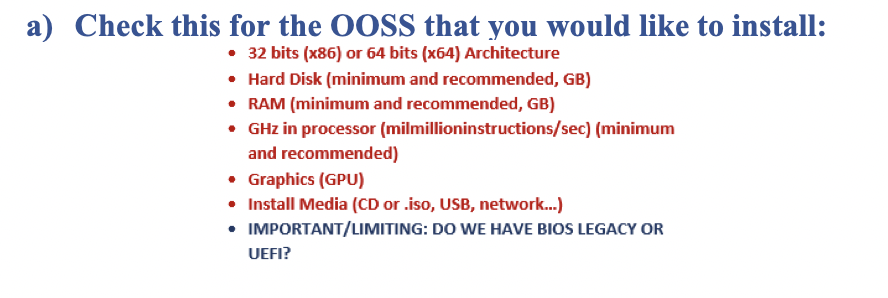
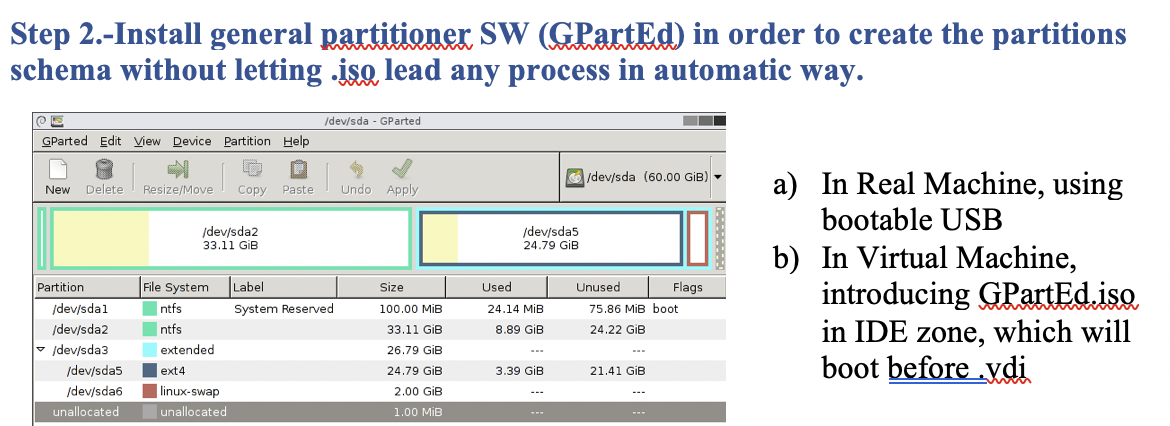
- check motherboard architecture
- check BIOS, UEFI
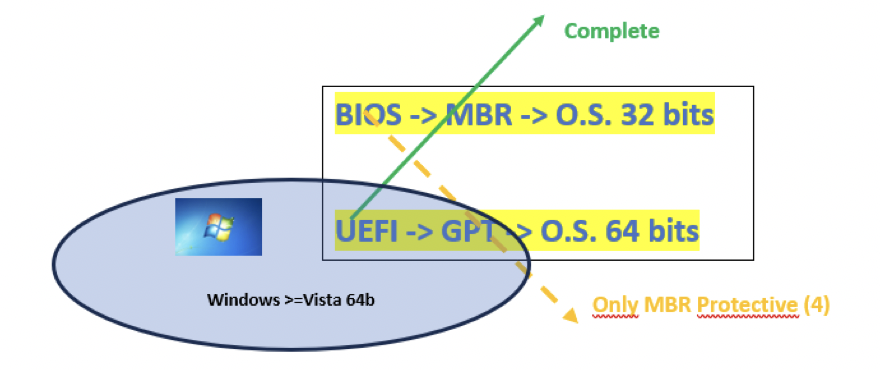
2️⃣ Use GPartEd in order to create the partitions manually
- do not use nextmode
💡 Conclusion
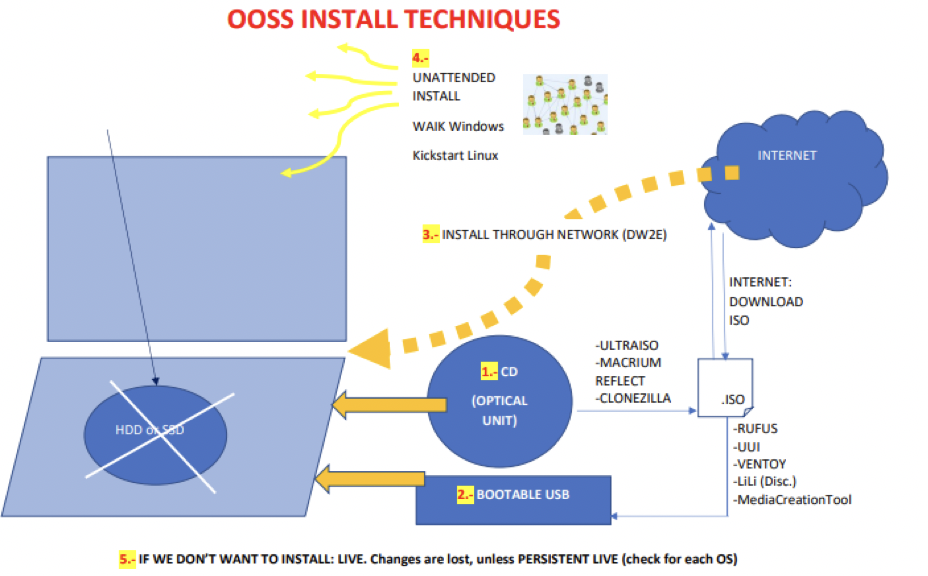
3️⃣ Install each OS
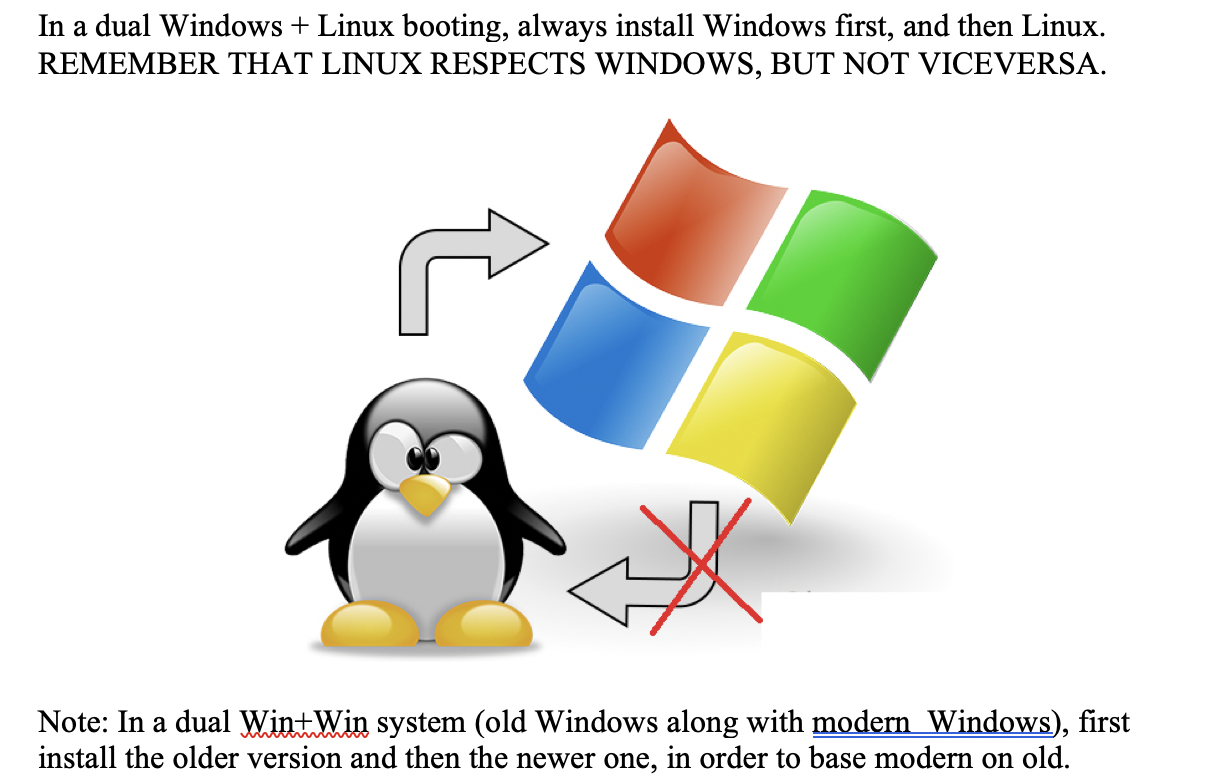
💡 General Rule
- need to install windows first
- then linux second
linux repsects windows, but not viceversa
- (⭐️ exam question)
- for
win+win - install old version first
- new second
- new over old
- 7 ➡️ 8 ➡️ 9 ➡️ 10
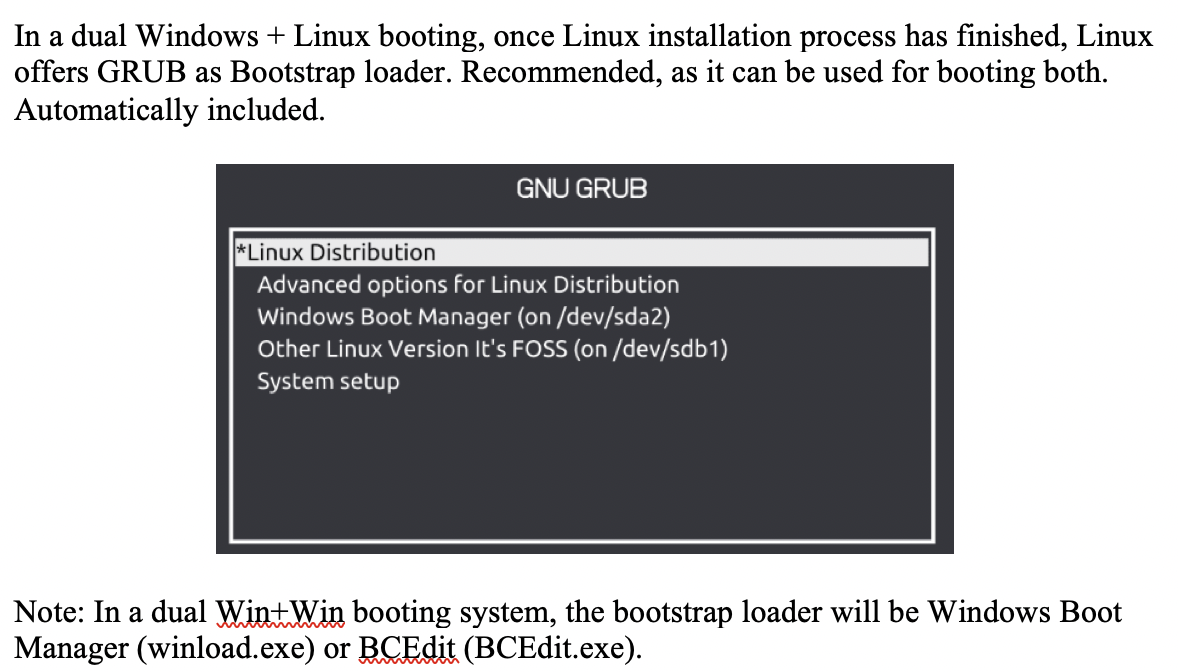
4️⃣ Install Bootstrap Loader
- create the menu
- if you did things in order, the linux gives you the order automatically
- name of the menu in linux: GRUB
- (⭐️ exam question)
- in a
win+win - you need to add the menu manually
- you need an external program to create the menu
- use Windows Boot Manager(
winload.exe) - or BCEdit(
BCEdit.exe)
5️⃣ Format GRUB
- decorate your menu
add company/customer logos…
- (1) change the wallpaper of the menu
- (2) choose the OS by default
- (3) waiting time: how much we will wait before booting the OS
1
2
3
4
5
6
❓ What happens if waiting time to 0 seconds?
- fast booting
- we will not see the menu(bootstrap loader)

🛠️ when you want to hide the expert OS
so clients cannot go into other OS
⭐️ Important!
- all the partitions that need to exist
- in all the possible situations
- in order to have a perfect disk
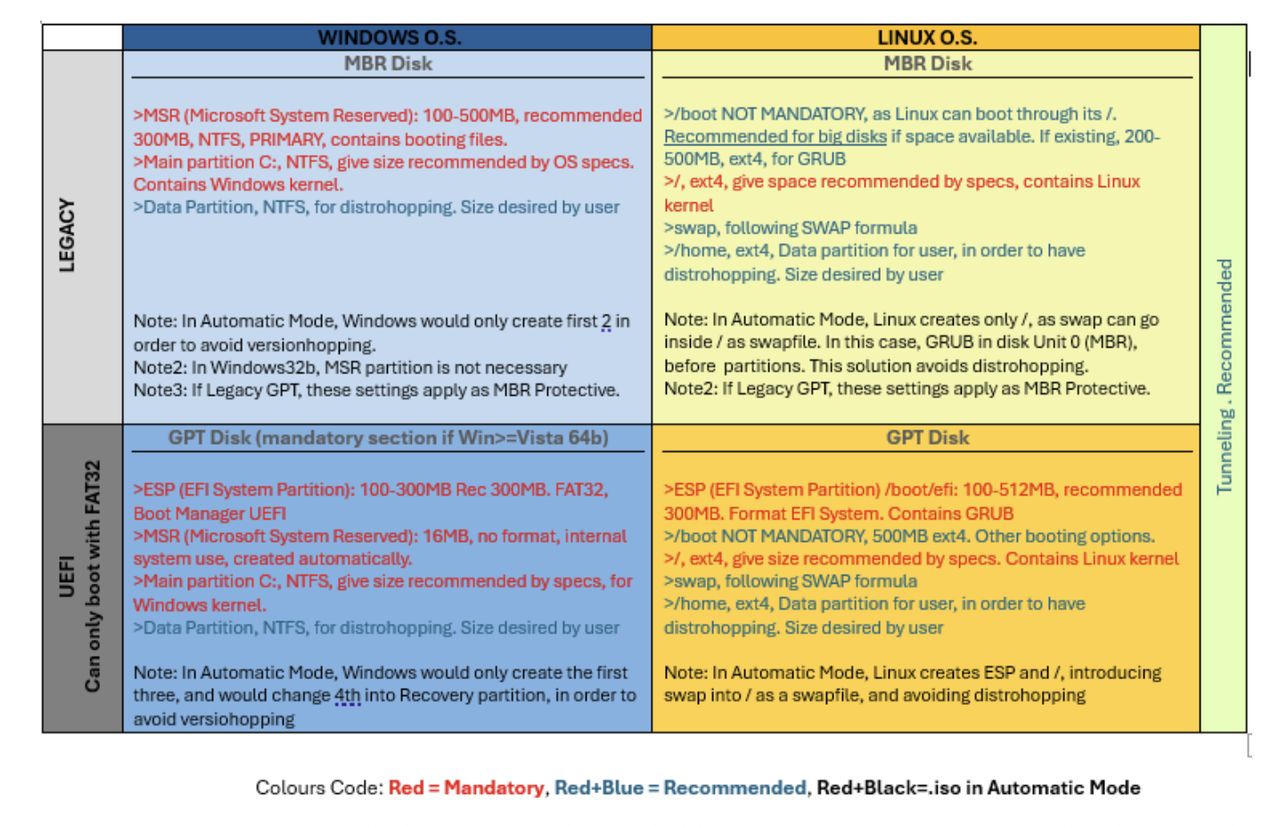
- 🔴 mandatory partitions
- 🔵 recommended partitions
legacy ❤️ windows
- all partitions are NTFS
✔️ two mandatory partitions:
- 1️⃣
MSR:- for booting windows if Linux is uninstalled, windows will boot independantly, NTFS, Primary, contain booting files, needs to be 300MB
- in windows 32,
MSRis not necassary -2️⃣C:: kernel of the system, NTFS
- 1️⃣
✔️ recommended partition:
- for data: for version-hopping, NTFS
- Note 1: in window 32 bits, MSR partition is not necassary
- Note 2: this is the case of legacy ❤️ GPT
UEFI ❤️ windows
✔️ three mandatory partitions:
- 1️⃣
MSR: for booting windows independently, needs to be 16MB - 2️⃣
C:: kernel, NTFS - 3️⃣
ESP: (EFI System Partition), must be FAT32, only partition in the Windows universe that is NOT NTFS - bc if it was NTFS, windows would set a letter
- then the user can think he can use it, save files inside
- so the system makes it FAT32
- so that it does not have a letter, so that users do not access
- to avoid letters, to avoid users from touching
- 1️⃣
- Note 1: in automatic mode, there will be a recovery partition
windows create recovery partition only in
UEFI- ✔️ recommended partition:
- for data: for version-hopping, NTFS
legacy ❤️ Linux
- ✔️ only one mandatory partition:
- it is called
/, which is therootof Linux - because Linux can boot from its root
linux does not need a boot partition, it can boot from the root
- ✔️ three recommended partitions:
- 1️⃣ partition
/boot: if the disk is very big - it can help booting when the disk is big
- what is a big disk? A disk bigger than 150GB
- so when we have a big disk, recommended to create a
/bootpartition - the
/bootdisk should be200~500MB, in the format ofext4 and when you create it, the menu(
GRUB) will be saved inside the/boot- 2️⃣
partition SWAPis also recommended - SWAP: part of HD to help the RAM
the size of SWAP should be…
- if the RAM is smaller than
4GB,SWAPsize should be double the size of RAM - if the RAM is
4GB, theSWAPsize should also be4GB - if the RAM is bigger than
4GB,SWAPsize should be half of the RAM size.
- if the RAM is smaller than
- 3️⃣ partition
/homefor the data this enables distro hopping
- Note 1: In automatic mode(next mode), linux will only create the mandatory partition, the root partition
- Note 2: same if you are using Legacy with GPT
UEFI ❤️ Linux GPT
- ✔️ mandatory partition:
- 1️⃣ root
/ 2️⃣
EFI Patition- 300MB
- format: EFI system, something we have never seen!(NOT FAT32, NOT ext2)
- this partition contains the GRUB
- ✔️ optional partitons:
- can create
/boot: you can enable other booting options - also
SWAP - also
/home
1
2
3
4
5
6
7
8
9
10
11
12
13
14
15
16
If So Hee has a legacy BIOS, and she wants a lin-win,
how many partitions must she have at least?

- 2 mandatory from Windows(booting windows, windows kernel)
- 1 mandatory from Linux(linux kernel)
- in total: she needs 3 partitions

If So Hee has a legacy BIOS, and she wants a lin-win,
how many partitions are recommended?
- 2 mandatory, 1 recommended from Windows
- 1 mandatory, 3 recommended from Linux
- in total: 7 partitions

If So Hee has a legacy BIOS, and she wants a lin-win,
what should she add when she wants to communicate between linux and windows?
- tunneling